Timber Frame Homes
Timber Frame Homes in Virginia
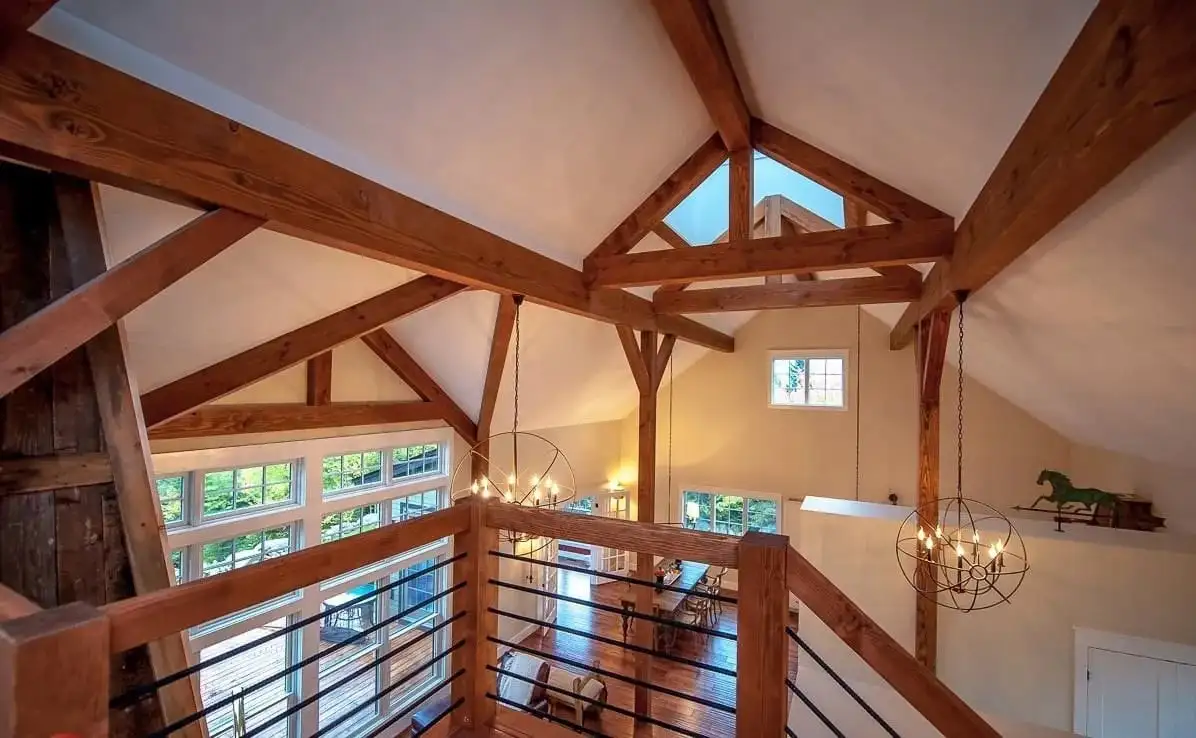
A timber frame home is a primary or secondary residence where heavy timber posts and beams—joined with traditional mortise-and-tenon joinery—form the structural skeleton and defining architectural feature.
Unlike timber frame barns (agricultural/storage) or pavilions (outdoor living), timber frame homes require full building envelope, HVAC, plumbing, and finish work to code for year-round habitation.
Best for: Primary residences, vacation homes, mountain retreats, and estate homes where architectural character and multi-generational durability are priorities.
For landowners planning thoughtful, long-term timber frame projects.
What types of timber frame homes can you build?
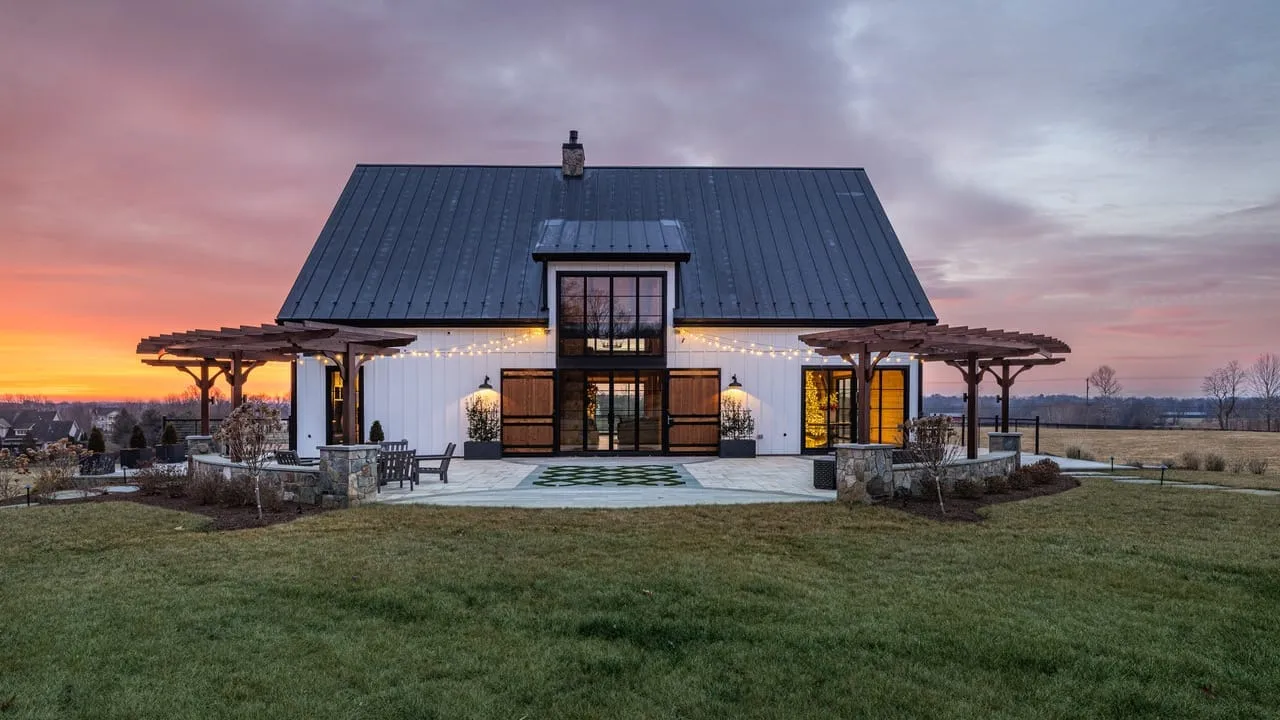
We build full timber frame homes, hybrid designs, mountain retreats, estate residences, and timber frame additions to existing homes.
Full Timber Frame Homes
Complete residences where the timber frame forms the primary structural system throughout.
Hybrid Timber Frame Homes
Timber frames for featured spaces (great rooms, entries) combined with conventional construction.
Mountain & Lake Retreats
Second homes designed for dramatic settings with panoramic views and outdoor connections.
Estate Homes
Large-scale residences on rural properties, often integrated with agricultural or equestrian facilities.
Timber Frame Additions
Adding timber frame great rooms, sunrooms, or covered porches to existing homes.
How much does a timber frame home cost?
Timber frame home costs vary significantly based on design complexity, enclosure method, and finish level. Typical ranges in Virginia:
$250–350/sq ft
Hybrid timber frame with quality finishes
$350–500+/sq ft
Full timber frame with premium finishes
Key factors that influence timber frame home pricing:

How long does it take to build a timber frame home?
Most timber frame homes take 18-30 months from initial consultation to move-in. Timeline depends on design complexity, permitting, and finish selections.
2-4 weeks
Feasibility & Site Evaluation
3-8 months
Design & Engineering
6-12 weeks
Permitting (varies by county)
12-18 months
Construction & Finishes
What enclosure strategies work with timber frame homes?
The timber frame provides the structural skeleton—enclosure wraps this frame with insulation and weather protection. Your enclosure choice affects energy performance, cost, and construction timeline.
SIP Enclosure
Structural Insulated Panels wrap the frame with 6-12" foam cores between OSB skins.
R-40 to R-60 walls
• Airtight construction
• Fastest enclosure timeline
• Best energy performance
Hybrid Enclosure
Combines SIP roof panels with conventional stud walls for cost flexibility.
R-20 to R-40 walls
• Lower material cost
• Familiar for trades
• Good energy performance
Conventional Framing
Standard 2x6 stud walls with spray foam or batt insulation around the frame.
R-19 to R-30 walls
• Lowest material cost
• Maximum trade availability
• Adequate energy performance
Energy Performance Note
Most timber frame homes with SIP enclosures exceed Virginia's energy code by 30-50%. The airtight construction reduces heating/cooling loads significantly—typical 2,500 sq ft timber frame homes see annual heating costs of $800-1,500 depending on fuel source and climate zone.
How does foundation design interface with timber frames?
Timber frame foundations must accommodate heavy point loads at each post location. Foundation design and timber frame engineering must be coordinated from the start.
Full Basement
Most common for full timber frame homes. Provides conditioned space below grade.
- • Point load piers at post locations
- • Anchor bolt patterns for sill plates
- • Waterproofing critical in Virginia clay soils
Crawl Space
Works well for sloped sites and reduces excavation costs.
- • Stem walls with pier reinforcement
- • Encapsulated for moisture control
- • Access for mechanical systems
Slab on Grade
Cost-effective for single-story or when bedrock is close to surface.
- • Thickened pads at post locations
- • In-slab radiant heat compatible
- • Requires careful site drainage
Pier & Grade Beam
Ideal for challenging sites with steep slopes or poor soils.
- • Minimizes site disturbance
- • Engineered for specific load paths
- • Often most expensive option
Critical Integration Point:
Foundation drawings must include exact anchor bolt locations, post base connection details, and bearing pad specifications before concrete work begins. Changes after pour are extremely costly.
Why choose timber frame for your home?
Timber frame construction offers unique benefits that conventional building methods cannot match—architectural character, structural longevity, and open living spaces.
Architectural Character
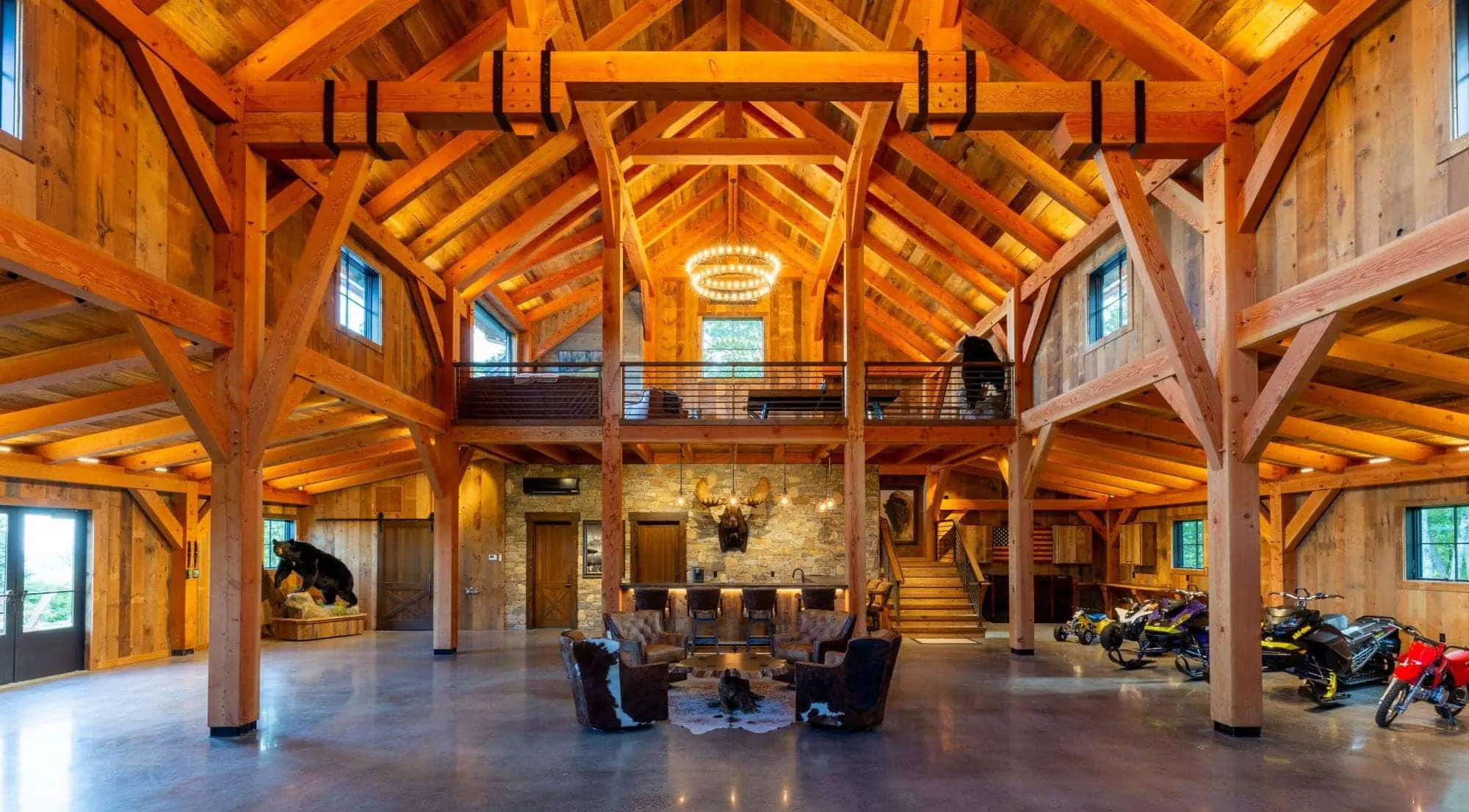
Exposed timber frames create dramatic, warm interiors that connect you with natural materials and craftsmanship.
Open Floor Plans
Post and beam construction enables expansive living spaces without interior load-bearing walls interrupting sightlines.
Multi-Generational Durability
Traditional mortise-and-tenon joinery creates structures designed to stand for centuries, not decades.
Energy Efficiency
Modern SIP (Structural Insulated Panel) enclosures provide exceptional thermal performance and airtight construction.
What is the timber frame home building process?
Our design-build approach provides single-source accountability from concept through move-in, eliminating the coordination problems that plague fragmented projects.
Feasibility & Site Evaluation
Assess your property, zoning, and project scope to establish viability and budget range.
Design & Engineering
Architectural design coordinated with structural engineering and timber frame specifications.
Permitting & Approvals
We manage county permits, HOA reviews, and regulatory compliance for residential construction.
Construction & Completion
Foundation, frame raising, enclosure, and finish work under single-source management.
What are common timber frame home mistakes to avoid?
Timber frame home projects fail when the process is fragmented. Avoid these common mistakes that lead to budget overruns and delays.
Hiring an architect without builder input
Builder involvement from day one ensures designs are buildable within budget
Choosing a timber frame fabricator without a design-build firm
The frame is only part of the project—you need someone to manage foundation, enclosure, and finishes
Underestimating SIP enclosure coordination
SIP installation requires precise planning and coordination with the timber frame engineer
Skipping the feasibility phase
Spend time upfront to confirm budget, site conditions, and permitting before investing in design
Not planning for mechanical systems early
HVAC, plumbing, and electrical need to be designed around the timber frame, not afterthoughts
Regional Expertise
Counties We Serve
Hearthstone Design Build specializes in timber frame and estate construction throughout Virginia's premier rural building markets.
Ready to discuss your timber frame home?
Start with a consultation to discuss your vision, site, and budget. We'll evaluate feasibility and provide guidance on the right approach for your project.