How We Work
The Hearthstone Design Build Process — Five Steps From Discovery To Handoff
Hearthstone Design Build organizes every engagement around one accountable contract. Architecture, engineering, permitting, procurement, and construction sit under a single team so decisions get made once and the schedule and the vision resolve together instead of colliding at permit submittal. The five steps below apply to a custom timber frame home, an estate outdoor-living program, and a ground-up agritourism campus alike — the depth of each step changes with scope.
Step 1 — Discovery Call
A 30–45 minute conversation about your land, your program, and the timeline you're working against. We surface the questions that matter most: is the parcel actually buildable, is the program feasible against your budget, and is our team the right partner for this specific project? No cost, no obligation. Not every discovery call turns into an engagement — that is by design.
Step 2 — Feasibility Review
A paid, structured written review of zoning, site conditions, permitting exposure, and budget realities before you spend six figures on architectural design. Feasibility outputs a written go/no-go recommendation with a defensible cost range, a permit-timeline projection, and the risks that will drive the schedule. This is where we routinely save clients 12–18 months and six figures by catching deal-breakers early — failed perc, easement conflicts, overlay triggers, VDOT geometry problems.
See /feasibility-review for what's included and how it's priced.
Step 3 — Pre-Construction Services Agreement (PCSA)
Once feasibility clears, qualified projects move into a Pre-Construction Services Agreement. Schematic design, structural and civil engineering, permitting strategy, and long-lead procurement all happen here — with the construction team already at the table so constructibility, budget alignment, and value engineering happen during design rather than after.
- Architect coordination (ours or yours)
- Structural engineering interfaces with the timber-frame fabricator
- Site and civil engineering (grading, stormwater, driveway, utilities)
- Permit strategy and submission (Loudoun 6–10 weeks, Fauquier 4–8, Clarke 4–6, Albemarle 6–10)
- Long-lead procurement for timber, windows, and specialty materials
Step 4 — Design-Build Construction
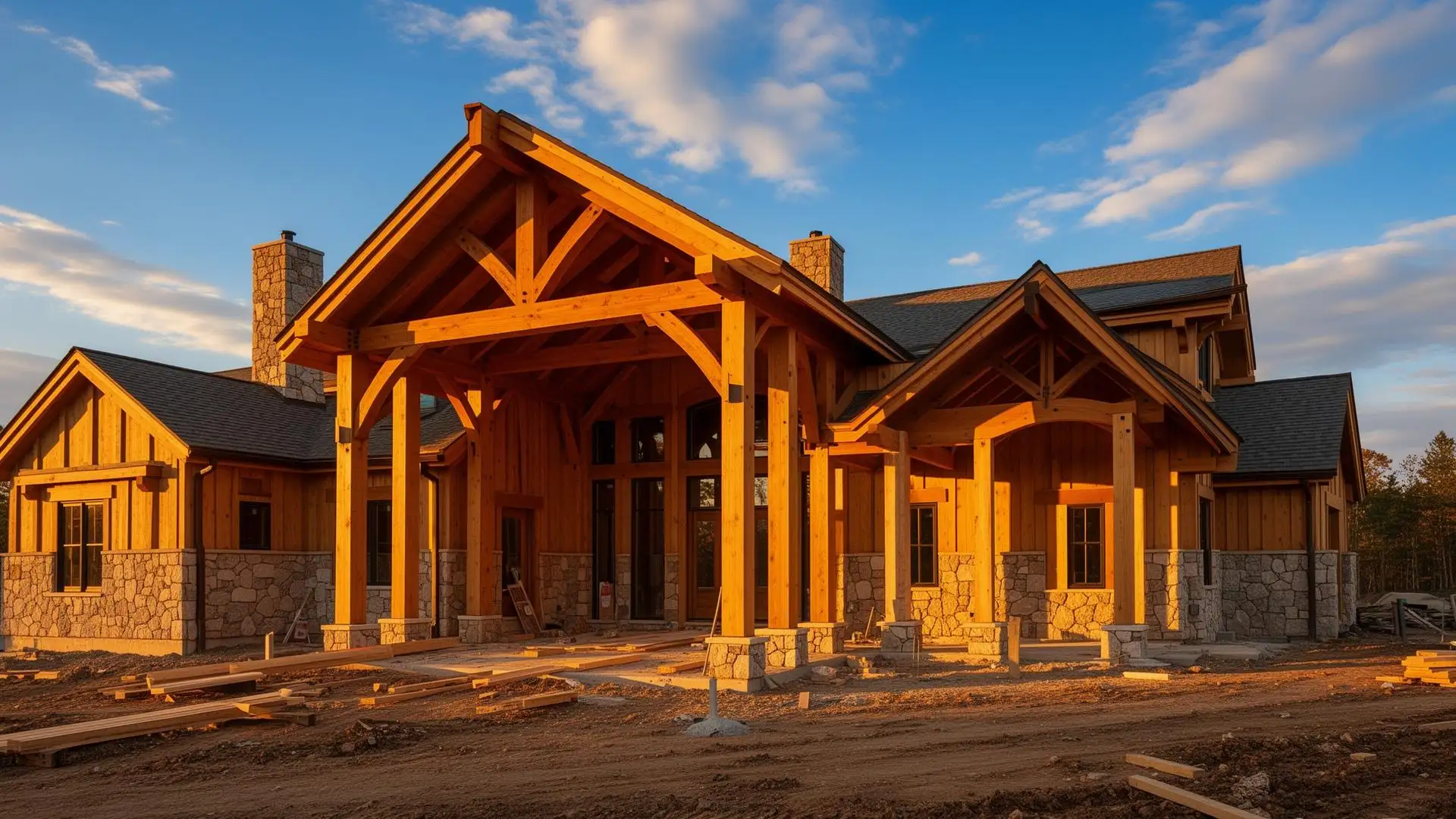
One contract, one team, one point of contact. Weekly scheduling and coordination, quality checkpoints at each phase, documented change control, and a client communication cadence that keeps you informed without burying you in email. Timber frame raising is scheduled around fabrication and site readiness so the frame goes up cleanly and enclosure follows immediately.
Step 5 — Closeout & Handoff
As-built documentation, system walkthroughs, warranty and service plan, final inspection, and certificate of occupancy. We hand you a project binder that a future homeowner (or a next-phase contractor) can actually work from — not a folder of PDFs no one opens again.
Why Design-Build Beats a Fragmented Approach
Fragmented projects fail predictably: architects design without builder input, the timber-frame company only fabricates, a separate contractor attempts assembly, and nobody owns the complete outcome. Communication gaps cause delays and cost overruns. Hearthstone's design-build model delivers single-point accountability from design through completion, coordinated design and construction under one contract, budget control from day one with transparent pricing, and a proven track record on timber frame homes, barns, and pavilions.
Common Mistakes We Help Owners Avoid
- Hiring an architect without builder involvement — designs that can't be built within budget or timeline.
- Using a timber-frame fabricator without a design-build firm — nobody to manage foundation, enclosure, or finishes.
- Underestimating timber-frame integration complexity — coordination failures cause delays and cost overruns.
- Starting construction before engineering is complete — field changes, rework, and budget blowouts.
Frequently Asked
- How long does the process take end to end?
- Discovery is a single call. Feasibility runs 2–3 weeks. PCSA and permitting run 4–8 months. Construction runs 8–14 months for a residential timber frame, 12–24+ months for a commercial or agritourism campus.
- Do you accept every project?
- No — Hearthstone accepts a limited number of engagements each year to protect execution quality. Fit is decided during discovery.
- Do you work with clients who already have an architect?
- Yes, when the architect is open to true collaboration with the builder during design. We routinely partner with outside architects, providing constructibility input, real-time budget alignment, and engineering coordination.