Timber Frame Gallery
Timber Frame Joinery Gallery — Craft Detail & Hand-Cut Connections
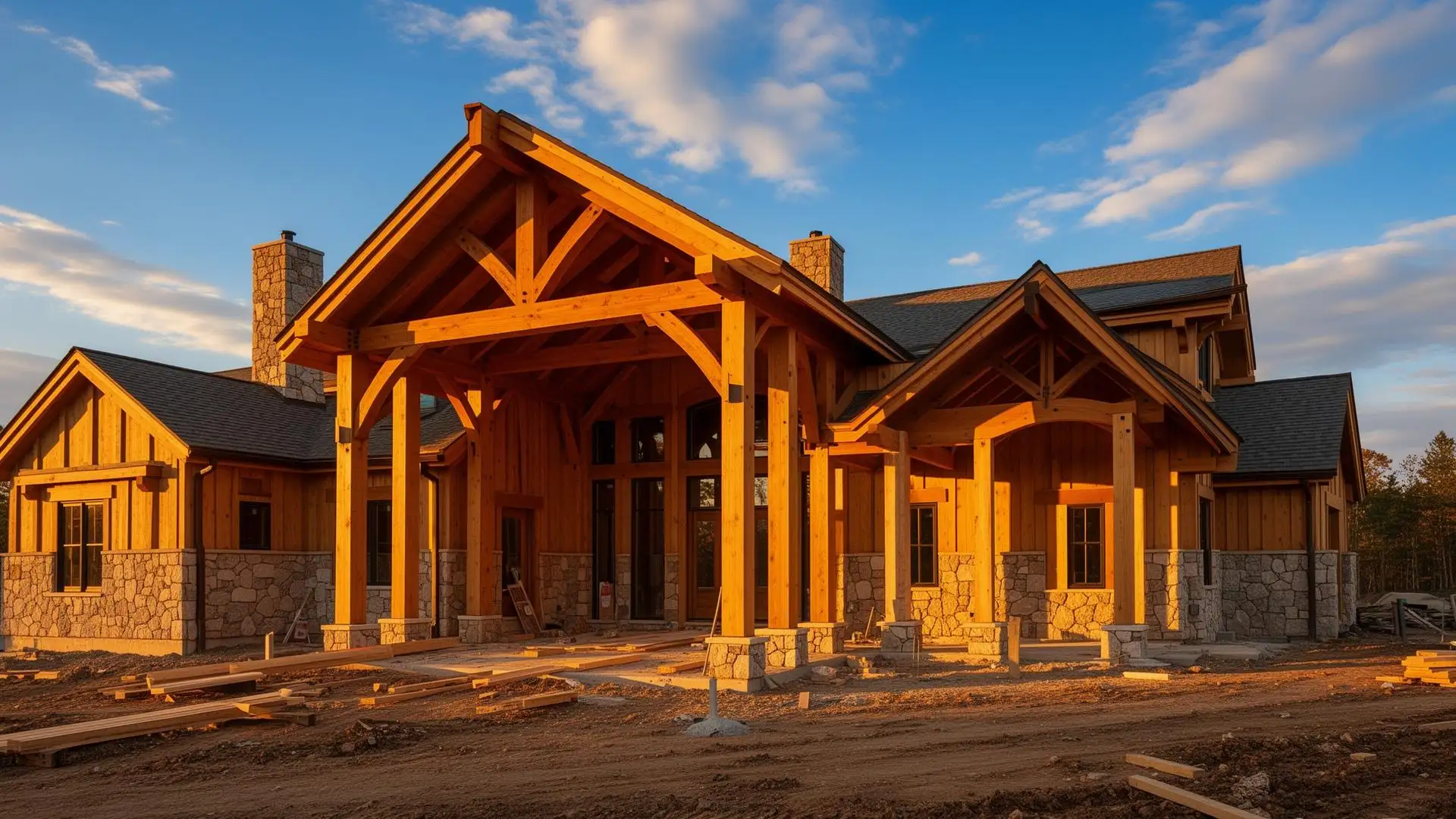
Precision craftsmanship of timber frame joinery, up close. Mortise-and-tenon connections, hand-cut pegs, and the Douglas Fir and White Oak detail work that defines a real timber frame — as opposed to a bolt-and-bracket post-and-beam or a kit assembly. Every connection Hearthstone Design Build ships is hand-cut by our specialty timber fabrication partners, not machine-milled at scale.
What This Gallery Documents
- Mortise-and-tenon — the primary structural connection — a shaped tenon locked into a matching mortise, secured with a hardwood peg.
- Scarf joints — end-to-end timber splices used on long runs and continuous plates.
- Braces & struts — knee braces and diagonal struts that give the frame its lateral rigidity and its aesthetic rhythm.
- Pegged connections — hand-driven hardwood pegs — no metal fasteners in the primary structural joinery.
- Species detail — grain, color, and joinery character across Douglas Fir, White Oak, and reclaimed antique.
How Hearthstone Frames Are Built
Every timber frame Hearthstone Design Build delivers is custom-engineered and hand-cut in mortise-and-tenon joinery by our specialty timber fabrication partners. Timber species is selected based on structural requirements, architecture, appearance, availability, and budget. Douglas Fir is commonly specified for structural timber frames, while other species may be selected based on the project. Enclosure is typically SIP (structural insulated panels) for a continuous thermal envelope, though conventional framing over timber is used on hybrid projects. Raising day is the moment the frame becomes the finished architecture — cranes, crews, and precision coordination in three to five days on most residential frames.
Related Timber Frame Resources
Frequently Asked
- Can I tour a completed timber frame?
- Private tours of select recent builds are arranged for serious prospective clients after a discovery call and owner permission. Most timber frame residences are private homes; commercial timber frame work at wineries, breweries, and community amenities is generally more accessible.
- Do you build timber frame outside Loudoun County?
- Yes — Hearthstone operates across Loudoun, Fauquier, and Clarke counties, with select projects across Northern Virginia and the Shenandoah Valley.
- What wood species do you use?
- Douglas Fir baseline; White Oak +$25/sq ft; reclaimed antique +$40/sq ft. Species selection happens during schematic design alongside joinery and enclosure decisions.