Now Hiring: Experienced Carpenters & CraftsmenApply Now
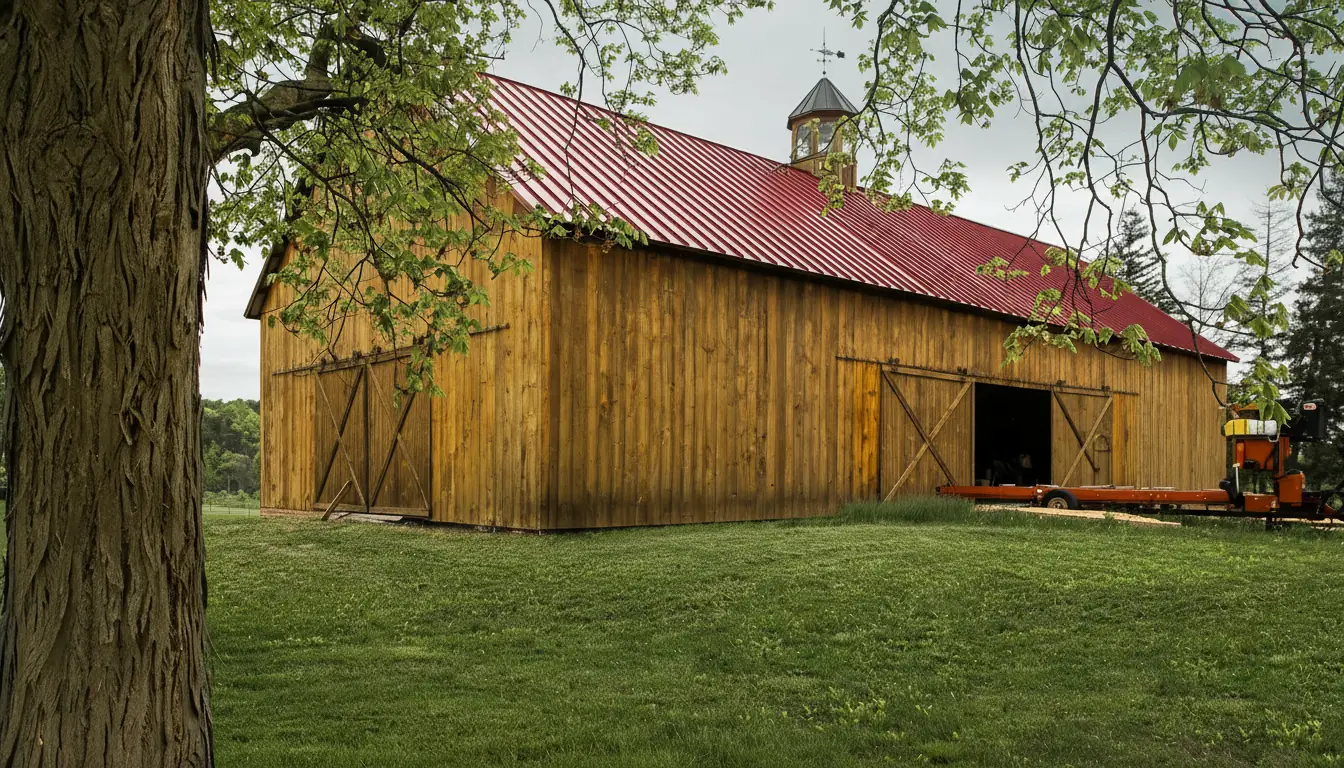
    Timber frame barn with board and batten siding

    Timber Frame Barns & Garages

    Timber Frame Barns & Garages in Virginia

    A timber frame barn is a non-residential structure for storage, agricultural use, or workshop space—where heavy timber posts and beams create large open spans without interior columns interrupting usable area.

    Unlike timber frame homes (habitation) or pavilions (open-air outdoor living), timber frame barns prioritize functional storage volume, equipment access, and weather protection over finished living space.

    Best for: Agricultural operations, equipment storage, vehicle garages, workshops, winery production, and estate outbuildings that require column-free interiors.

    Start a Timber Frame Project Conversation

    For landowners planning thoughtful, long-term timber frame projects.

    What types of timber frame barns and garages can you build?

    We build agricultural barns, estate barns, winery structures, equipment storage, workshop barns, and multi-bay garages—all with traditional timber frame construction.

    Agricultural Barns

    Working barns for hay storage, livestock, and farm operations—built with traditional craftsmanship for modern agricultural needs.

    Timber Frame Garages

    Multi-bay garages and carriage houses that protect vehicles while enhancing your property's architectural character.

    Winery & Estate Barns

    Signature structures for wineries, breweries, and estate properties—designed for production, events, or both.

    Equipment Storage

    Large-span structures for farm equipment, boats, RVs, and recreational vehicles requiring covered storage.

    Workshop Barns

    Functional workspaces with the character of traditional timber framing—ideal for woodworking, restoration, or creative studios.

    How much does a timber frame barn cost?

    Timber frame barn and garage costs vary based on size, enclosure level, finish quality, and site conditions. Typical ranges in Virginia:

    $40–80/sq ft

    Timber frame only (frame, enclosure, basic finish)

    $80–150/sq ft

    Finished barn with utilities, insulation, and interior finish

    $150–250+/sq ft

    Estate-quality barns with premium finishes and event capability

    Key factors that influence timber frame barn pricing:

    Size and span requirements
    Foundation type (slab, pier, or full foundation)
    Enclosure level (open, partially enclosed, or fully enclosed)
    Finish level (basic agricultural vs. finished interior)
    Utilities (electrical, plumbing, HVAC)
    Site accessibility and preparation
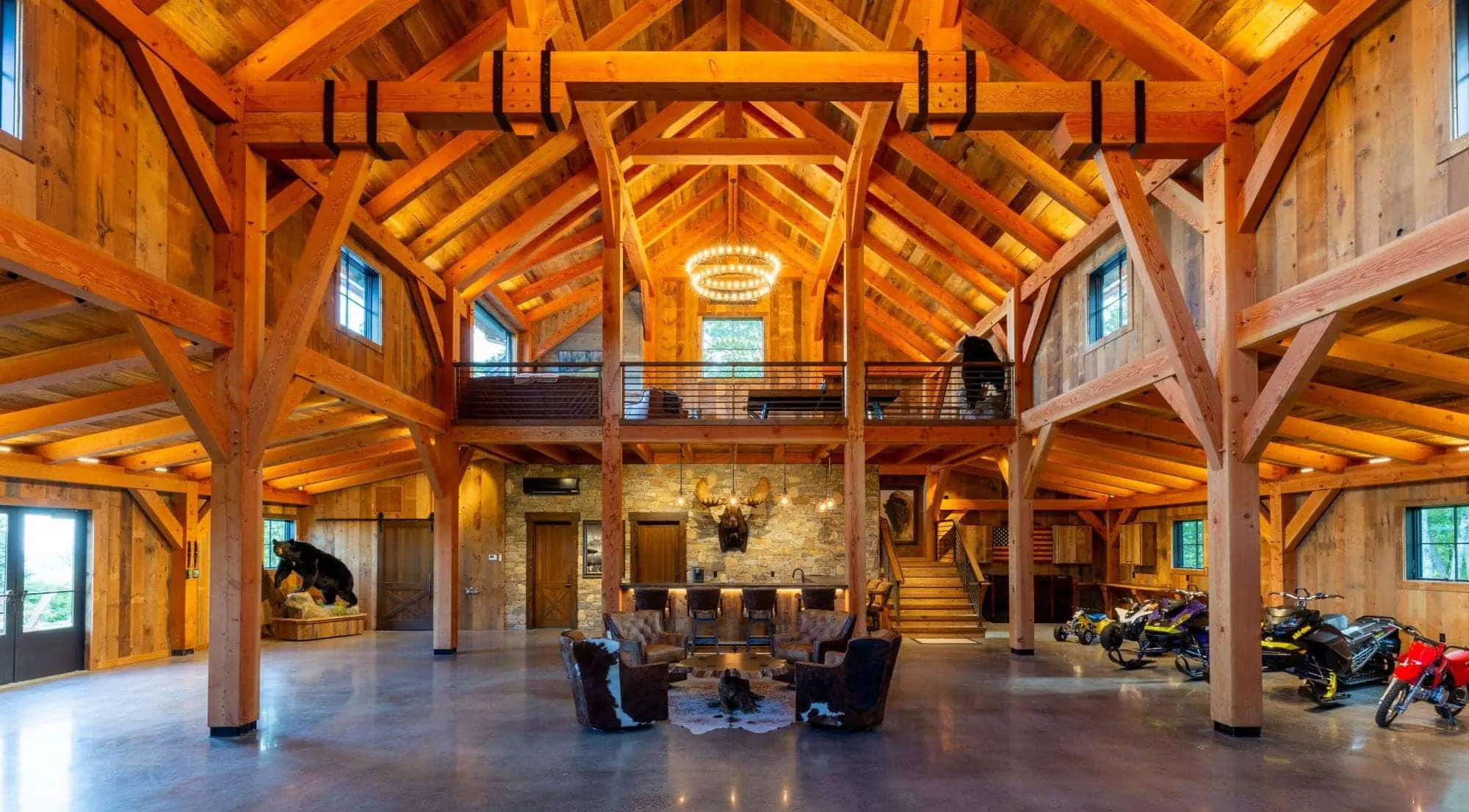
    Timber frame barn interior showing exposed beams

    How long does it take to build a timber frame barn?

    Most timber frame barns and garages take 8-18 months from initial consultation to completion. Timeline depends on size, complexity, and permitting requirements.

    2-4 weeks

    Feasibility & Site Evaluation

    1-3 months

    Design & Engineering

    4-8 weeks

    Permitting (varies by county)

    4-12 months

    Construction & Finishes

    Agricultural structures may qualify for expedited permitting in some jurisdictions.

    How do timber frame barns accommodate future uses?

    Timber frame construction's open spans and structural flexibility allow buildings to evolve with your needs—from agricultural use to event venue to living space without structural modification.

    Agricultural → Events

    Working barns convert to wedding venues or tasting rooms.

    • • Add finished flooring over concrete
    • • Install commercial electrical
    • • Add restroom facilities
    • • Upgrade HVAC for occupancy

    Storage → Workshop

    Equipment storage converts to professional workspace.

    • • Insulate and finish interior
    • • Add climate control
    • • Upgrade electrical capacity
    • • Install tool-grade lighting

    Barn → Guest Living

    Upper levels or wings convert to residential use.

    • • Requires building permit update
    • • Add bedroom-compliant egress
    • • Install kitchen and bath
    • • Meet residential energy code

    Planning Tip:

    If you anticipate future conversion, design the initial structure with adequate ceiling heights (10-12'+), utility rough-ins, and floor drainage. These are inexpensive during initial construction but costly to add later.

    What span limits apply to timber frame barns?

    Timber species, joint engineering, and truss design determine how far you can span without interior columns. Understanding these limits helps you plan functional interior layouts.

    Typical Clear Span Ranges

    24-30 ft

    Standard timber trusses with Douglas Fir or White Oak

    30-40 ft

    Heavy timber king post or queen post trusses

    40-60+ ft

    Engineered hammer beam or arch trusses

    Engineering Considerations

    • • Snow loads (30-40 psf in Virginia mountains)
    • • Wind exposure classification for rural sites
    • • Seismic zone requirements
    • • Connection hardware capacity

    Species Selection Impact

    • • Douglas Fir: highest strength-to-weight ratio
    • • White Oak: superior decay resistance
    • • Reclaimed timbers: variable but often excellent
    • • Eastern White Pine: economical for lighter loads

    How does agricultural zoning affect timber frame barn permits?

    Virginia counties vary significantly in how they regulate agricultural structures. Understanding your jurisdiction's rules affects timeline, cost, and permitting strategy.

    Ag-Exempt Structures

    Some jurisdictions exempt agricultural buildings from full building permits.

    • • Loudoun: Ag buildings often exempt if truly agricultural use
    • • Fauquier: Farm building exemption for bona fide farms
    • • Clarke: Simplified process for ag structures

    Exemption does not apply to event venues or residential conversions.

    Full Permit Required

    Non-agricultural uses trigger standard building permit requirements.

    • • Event venues require commercial occupancy permits
    • • Living space requires residential code compliance
    • • Workshops with customers need business zoning approval

    Plan for 6-12 week permit timeline for commercial uses.

    Land Use Planning Note:

    If your property has land-use taxation (agricultural district), converting buildings to non-agricultural use may trigger rollback taxes. Consult with your county commissioner of revenue before planning non-farm uses.

    Why choose timber frame for your barn or garage?

    Timber frame construction offers unique benefits for agricultural and utility structures—durability, open spans, and architectural character that conventional construction cannot match.

    Multi-Generational Durability

    Traditional mortise-and-tenon joinery creates structures designed to last centuries, not decades.

    Open-Span Interiors

    Post and beam construction allows large open spaces without interior columns interrupting usable area.

    Architectural Character

    Exposed timber frames create distinctive structures that complement the rural landscape.

    Functional Flexibility

    Open designs can be adapted over time as your needs evolve—from storage to events to workshops.

    What is the timber frame barn building process?

    Our design-build approach provides single-source accountability from concept through completion, eliminating coordination problems between multiple contractors.

    01

    Feasibility & Site Evaluation

    Assess your property, zoning, setbacks, and project scope to establish viability.

    02

    Design & Engineering

    Structural design coordinated with timber frame specifications and local codes.

    03

    Permitting & Approvals

    We manage county permits, agricultural exemptions, and regulatory compliance.

    04

    Construction & Completion

    Foundation, frame raising, enclosure, and finish work under single-source management.

    What are common timber frame barn mistakes to avoid?

    Agricultural and utility structures have unique requirements. Avoid these common mistakes that lead to performance issues and regret.

    Undersizing the structure

    Plan for 20-30% more space than you think you need—equipment grows and needs change

    Skipping proper foundation engineering

    Timber frames are heavy; inadequate foundations cause settling and structural problems

    Ignoring drainage and grading

    Water management around barns is critical—poor drainage leads to foundation and floor damage

    Choosing the wrong enclosure for your use

    Open, partial, or full enclosure affects ventilation, temperature, and long-term utility

    Not planning for future utility needs

    Adding electrical, water, or HVAC later is expensive—plan infrastructure upfront

    Ready to discuss your timber frame barn or garage?

    Start with a consultation to discuss your needs, site conditions, and budget. We'll evaluate feasibility and provide guidance on the right approach.

    Before You Build on Rural Land in Northern Virginia

    Free planning guide — zoning, permitting, septic, timelines, and cost factors.