
TL;DR
Fauquier County uses RA (Rural Agricultural, 25-acre minimum) and RC (Rural Conservation, 50-acre minimum) zoning across most of the county. Building outside designated Service Districts is heavily restricted. Conservation easements affect 25%+ of rural parcels. Permit timelines run 6–12 weeks for straightforward residential, longer for parcels with easements or in historic districts.
Key Takeaways
- Fauquier RA zoning requires 25-acre minimum lot size; RC requires 50-acre minimum
- Most rural building must occur within designated Service Districts (Warrenton, Marshall, The Plains, etc.)
- Conservation easements affect ~25% of Fauquier rural land — verify before purchase
- Health Department septic approval is the longest single step (6–14 weeks)
- Historic districts (Warrenton, Upperville, The Plains) trigger ARB review
- Steep slope and floodplain overlays are heavily enforced
- Total permit timeline averages 8–14 weeks for residential, 16–28 weeks for complex estates
Related Hearthstone Projects
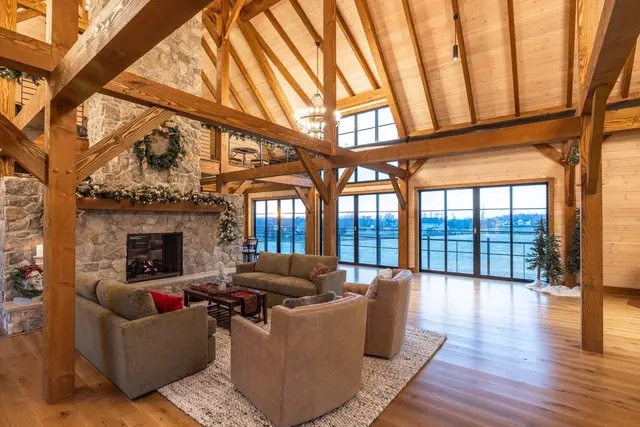
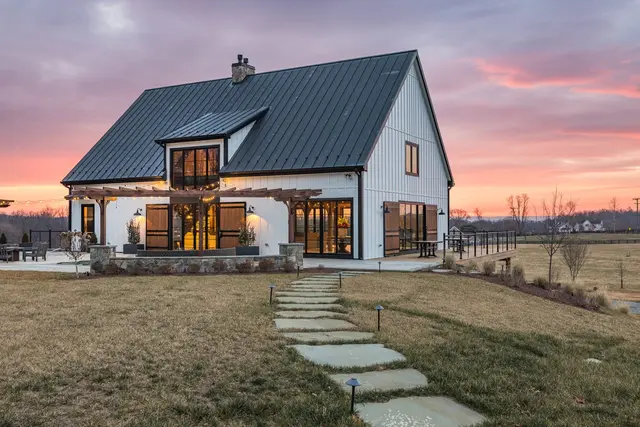
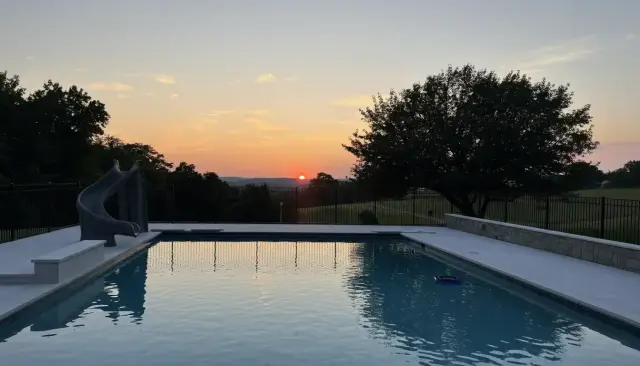
We have watched owners buy 100-acre Hunt Country parcels expecting a multi-structure estate, then learn the easement allows one house inside a half-acre envelope in a specific corner. In Fauquier, the easement overrides the zoning — and with RA at a 25-acre minimum and RC at 50, the rules look nothing like Loudoun's. Read the recorded easement before you design.
How is building in Fauquier County different from Loudoun?
Fauquier zones rural land as RA (25-acre minimum) and RC (50-acre minimum) — far larger than Loudoun's AR-1 and AR-2 — and concentrates growth inside ten named Service Districts. Roughly 25% of rural acreage sits under conservation easement, which overrides zoning. A complex Hunt Country estate permit runs 16 to 28 weeks.
Fauquier Builds Differently Than Loudoun
If you're crossing the Bull Run Mountains expecting Fauquier County to work like Loudoun, you'll be surprised. The two counties share a border, share Hunt Country geography, and share a lot of the same builders — but their land use frameworks are fundamentally different.
Loudoun County uses AR-1 (3-acre minimum) and AR-2 (5-acre minimum) for most rural land. Fauquier uses RA (Rural Agricultural, 25-acre minimum) and RC (Rural Conservation, 50-acre minimum). That alone changes everything about parcel value, building strategy, and what's even possible on a given site.
Add Fauquier's Service District concentration model, the high prevalence of conservation easements held by the Virginia Outdoors Foundation and Piedmont Environmental Council, and the historic district overlays in Warrenton, Upperville, and The Plains — and you have a building environment that rewards owners who do their homework before they design. Owners ready to act on this framework can pair the guide with our design-build a Hunt Country estate page for the construction-side playbook.
This guide walks through what Hunt Country landowners need to know to build successfully in Fauquier in 2026.
Fauquier Zoning Categories That Matter for Estate Building
Rural Agricultural (RA) — 25-Acre Minimum
The dominant rural zoning category in Fauquier. Permits single-family residential, agricultural use, and limited accessory uses. The 25-acre minimum applies to new parcel creation through subdivision; existing parcels of any size remain buildable.
RA permits agricultural operations, equestrian facilities, accessory dwelling units (with conditions), and many of the rural commercial uses Hunt Country properties depend on (boarding stables, hay operations, cattle).
Rural Conservation (RC) — 50-Acre Minimum
The most restrictive rural category. Applied to the most environmentally sensitive areas of the county — particularly the Bull Run Mountain corridor, the upper Rappahannock watershed, and several scenic byways. The 50-acre minimum is enforced strictly. Building, while permitted, faces heavier site plan review.
Service Districts
Fauquier concentrates dense residential and commercial development inside designated Service Districts: Warrenton, Marshall, The Plains, Upperville, Bealeton, Remington, Calverton, Catlett, New Baltimore, and Opal. Inside these districts, smaller lot sizes and broader use categories are permitted. Outside them, the rural zoning categories apply.
This concentration is intentional — Fauquier's planning policy explicitly directs growth into Service Districts to preserve agricultural land between them.
Conservation Easements: The Wildcard
Approximately 25% of Fauquier's rural acreage is under conservation easement, held primarily by:
- Virginia Outdoors Foundation (VOF) — the largest holder
- Piedmont Environmental Council (PEC)
- Land Trust of Virginia
- Various private and family trusts
Easements override zoning. A 200-acre RA parcel under a VOF agricultural easement may permit only a single residence within a defined 3-acre building envelope, regardless of what RA zoning would otherwise allow. The easement document is the controlling instrument.
Before purchasing or designing on Fauquier land, pull the recorded easement from the county land records and read it carefully. Look for:
- Defined building envelope (size and location)
- Restrictions on accessory structures (barns, pavilions, pool houses, guest cottages)
- Limits on subdivision
- Forestry or agricultural use requirements
- Notification requirements before construction
We've seen owners purchase 100-acre Hunt Country parcels expecting to build a multi-structure estate, only to discover the easement permits one residence inside a half-acre envelope on a specific corner of the property. The seller wasn't hiding it — they just didn't know either.
Permit Process in Fauquier
Standard Residential Building Permit
For a new home outside a historic district and without easement complications:
1. Pre-application meeting (recommended): Free, helps surface issues early
2. Health Department septic approval: 6–14 weeks (longest single step)
3. Building permit submission: Plans, structural, energy, site plan
4. Building permit review: 4–8 weeks
5. Permit issuance: Total 8–14 weeks from start
Estate Build with Multiple Structures, Easement, or Historic Review
Add 4–14 weeks depending on complexity:
- Easement steward review (VOF, PEC, etc.): 4–10 weeks
- Architectural Review Board: 4–8 weeks
- Floodplain study (if applicable): 6–12 weeks
- Steep slope / Mountainside Overlay: 4–6 weeks
Realistic total for a complex Hunt Country estate: 16–28 weeks from kickoff to permit in hand.
Historic District Considerations
Fauquier has multiple Architectural Review Board (ARB) districts:
- Warrenton Historic District — Old Town and surrounding blocks
- Upperville Historic District — village and approach corridors
- The Plains Historic District — village center
- Marshall Historic District — village center
ARB review covers exterior materials, massing, roof form, window patterns, and how the project relates to neighboring structures. Approval requires a presentation to the ARB board, typically with revisions and a follow-up meeting.
For estate parcels adjacent to but not within a historic district, the ARB doesn't have authority — but the planning department often still requests informal courtesy review. It's worth doing.
Septic, Wells, and Site Constraints
Fauquier's geology — primarily Triassic basin sediments and Piedmont metamorphic rock — produces highly variable soil conditions. Some parcels perc easily; others require alternative septic systems (mound, sand filter, ATU) at $35K–$85K vs $18K–$32K for conventional gravity systems.
Always pull a soil and percolation evaluation before purchasing land if septic capacity is critical to your build plan. This is the most common deal-breaker we see in Fauquier acquisitions.
Wells in Fauquier are predominantly bedrock wells. Yields vary dramatically — some parcels deliver 25+ gpm, others struggle to hit 3 gpm. Plan for $18K–$45K for a residential well plus pressure system.
Where Owners Get Stuck
The three most common Fauquier mistakes we encounter:
1. Buying RA or RC land without verifying the easement status — discovering after closing that the building envelope is tiny or in the wrong location
2. Designing the home before percolation testing — then having to relocate the house, septic, or both after $40K of architectural work
3. Ignoring the historic district overlay near a village — and burning 8 weeks redesigning to ARB requirements
All three are avoidable with 2–4 weeks of pre-design due diligence.
Where We Fit In
Hearthstone Design Build manages estate projects across Fauquier — concentrated in the Warrenton, Marshall, The Plains, and Upperville areas. Our integrated design-build process starts with a parcel and easement review before any design work begins, so you don't end up with $50K of drawings for a house that can't sit where you wanted it.
If you own land in Fauquier — or you're evaluating a parcel for purchase — contact us for a pre-design site review. It's the cheapest, most valuable hour you'll spend on the project.
Continue reading: our design-build services.
Frequently Asked Questions
What are Fauquier County's zoning categories for rural building?
Fauquier uses primarily Rural Agricultural (RA) with a 25-acre minimum lot size and Rural Conservation (RC) with a 50-acre minimum. Service Districts (Warrenton, Marshall, The Plains, Upperville, Bealeton, Remington) allow smaller residential lots and more permissive use rules. Most Hunt Country estate parcels are RA or RC zoned.
How long do building permits take in Fauquier County?
Straightforward residential building permits in Fauquier average 6–12 weeks from submission. Estates with conservation easements, historic district review, septic complexity, or floodplain involvement run 16–28 weeks. The Health Department septic approval is typically the longest single step at 6–14 weeks.
Can I build on land with a conservation easement in Fauquier?
Sometimes — but the easement document controls what's permitted, not the zoning ordinance. Most agricultural conservation easements (held by VOF, PEC, or land trusts) reserve a building envelope of 1–5 acres for residential use. Outside that envelope, building is prohibited. Always pull the recorded easement before designing.
What's the difference between building in Loudoun vs Fauquier?
Loudoun has more flexibility — AR-1 (3-acre minimum) and AR-2 (5-acre minimum) compared to Fauquier's RA (25-acre) and RC (50-acre). Fauquier is more restrictive on commercial agricultural, more focused on protecting open space, and uses Service Districts to concentrate development. Permit timelines are similar; design review is generally heavier in Fauquier.
Do I need ARB review in Warrenton, Upperville, or The Plains?
Yes, if your project is in a designated Architectural Review Board district. Warrenton has an active Old Town historic district. Upperville and The Plains have village historic overlays. ARB review covers exterior materials, massing, and architectural details. Plan an additional 4–8 weeks for ARB approval and budget for revisions.