
TL;DR
Virginia §3.2-6400 protects agritourism activity tied to on-site agricultural production. Combined with Loudoun AR-2, it's the optimal framework for brewery, winery, and farm-event campuses.
Key Takeaways
- Virginia Code §3.2-6400 defines and protects agritourism activity
- Agritourism overlays AR-2 to constrain local regulation
- Build agricultural infrastructure before public venue
- Lark Brewing Co. is a referenceable AR-2 + §3.2-6400 proof case
Related Hearthstone Projects
Virginia Code §3.2-6400 protects bona fide agritourism on working farms, but it will not get an event barn through Loudoun's local zoning on its own. Agritourism above a set scale needs a Special Exception, which adds 3–6 months and $15,000–$30,000 and can be denied, so confirm the path before you design to it.
How does Virginia's agritourism statute affect what I can build?
Virginia Code §3.2-6400 defines agritourism and limits how localities can restrict bona fide agritourism activities on working farms, but it does not override Loudoun's local zoning for structures or larger commercial operations. Many agritourism uses above a certain scale require a Special Exception from the Board of Supervisors, adding 3–6 months and $15,000–$30,000. Confirm your parcel's status before design.
What is agritourism in Virginia?
Under Virginia Code §3.2-6400, "agritourism activity" means any activity carried out on a farm or ranch that allows members of the general public, for recreational, entertainment, or educational purposes, to view or enjoy rural activities — including farming, ranching, historic, cultural, harvest-your-own activities, or natural activities and attractions. The statute restricts how local governments can regulate bona fide agritourism, giving operators meaningful protection.
Why §3.2-6400 matters for build projects
The statute is the legal foundation that lets a Virginia farm host events, tastings, weddings, harvest tours, and on-farm retail tied to agricultural production — without those activities being treated as commercial uses that would otherwise require rezoning. For a ground-up brewery or winery campus on rural land, that is the difference between a 6-month entitlement process and a 24-month one.
How agritourism overlays AR-2 in Loudoun County
Loudoun County's AR-2 zoning district (see our AR-2 zoning guide) permits Limited Brewery, Farm Winery, and Limited Distillery by-right under §4.08.05. The §3.2-6400 agritourism overlay then constrains how the County can layer additional rules on the agritourism components of those uses — parking, signage, hours, event count — so long as the activity is genuinely tied to on-site agricultural production.
What counts as bona fide agritourism
- Tastings, tours, and retail of products grown or produced on the farm
- Educational programs tied to agriculture (harvest workshops, cooking classes)
- On-farm events that complement the agricultural use (harvest dinners, farm-to-table)
- Recreational access to farm landscape (pumpkin patches, corn mazes, you-pick)
Common agritourism build mistakes
- Designing the venue before the production component. The agritourism protection attaches to the agricultural activity. Build the agricultural infrastructure first.
- Underestimating septic + parking. Event-day loads break sites designed for daily use only.
- Ignoring VDOT entrance permits. Rural entrances on state-maintained roads require commercial entrance permits for any meaningful traffic.
- Skipping the local pre-application alignment. Loudoun DBD will tell you up front whether your concept is recognized as bona fide agritourism.
Proof case: Lark Brewing Co.
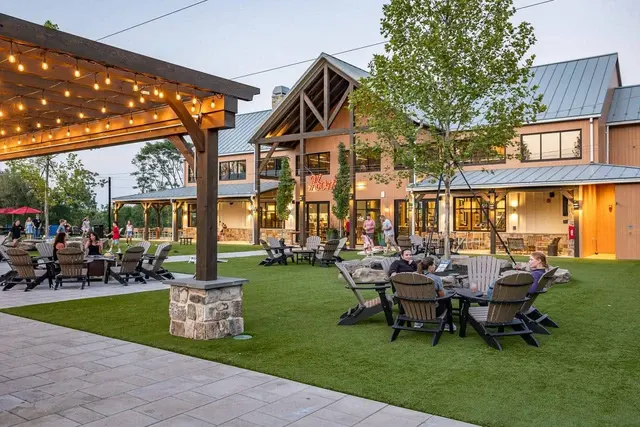
Hearthstone Design Build delivered Lark Brewing Co. in Aldie, Loudoun County, under AR-2 zoning with the §3.2-6400 agritourism overlay. The 14-acre campus pairs brewing production with taproom, outdoor lawn seating, and event capacity — all under by-right Limited Brewery use.
Build it right under §3.2-6400
If you're planning an agritourism campus on Virginia rural land, the playbook is: zoning confirmation first, agricultural infrastructure design second, public-facing venue design third. Start with a zoning strategy session, then move into design-build delivery.
Continue reading: our design-build services.
Frequently Asked Questions
What is the Virginia agritourism statute?
Virginia Code §3.2-6400 defines agritourism as on-farm activity allowing the public to view or enjoy rural and agricultural activities, and limits how local governments can regulate it.
How does §3.2-6400 interact with AR-2 zoning?
AR-2 permits Limited Brewery, Farm Winery, and Limited Distillery by-right. §3.2-6400 then constrains how the County can layer additional rules on the agritourism components.
Can I host weddings on a Virginia farm under agritourism?
On-farm events that complement the agricultural use are generally covered, but bona fide tie to on-site production matters. Confirm scope with the County in a pre-application meeting.