Written by Dan Caporale, Principal — USMC Veteran, VA Class A Contractor License #2705195817.
Rural land in Clarke County runs 30–50% less per acre than comparable western Loudoun parcels, and a residential building permit clears in 6–10 weeks instead of Loudoun's 10–16. Our Berryville Timber Frame Barn, a 40x100 heavy-timber structure on stone, is what construction here looks like done right.
What should landowners know before building in Clarke County, Virginia?
Clarke County runs on a single A-1 agricultural zoning district, not Loudoun's AR-1/AR-2/A-3 tiers, and a building permit for a rural residence typically issues in 6–10 weeks versus Loudoun's 10–16. Rural land costs 30–50% less per acre, but karst limestone geology drives the well, septic, and Shenandoah floodplain risks you must confirm before siting.
Related Hearthstone Projects

Why Clarke County
Clarke County is one of Virginia's best-kept secrets for estate buyers. The county's 176 square miles are almost entirely rural -- there is no urban development corridor, no suburban sprawl, and no major commercial development to break the landscape. Berryville, the county seat, has a walkable small-town character that larger Hunt Country towns have lost.
The land itself is some of the most beautiful in the mid-Atlantic. Rolling Piedmont ridges give way to the Shenandoah Valley floor, with the river defining the western boundary and the Blue Ridge defining the east. Cattle, horses, and hayfields occupy the pastureland. Large working farms have been in the same family for generations.
Land costs in Clarke County are meaningfully lower than comparable land in Loudoun County -- often 30-50% less per acre for similar topography, views, and agricultural character. For buyers who have been priced out of western Loudoun or who want more acreage for the same investment, Clarke County is the logical next look.
The Regulatory Differences from Loudoun
Clarke County's regulatory environment for rural construction differs from Loudoun County's in several important respects.
Zoning Structure
Clarke County uses an A-1 (Agricultural) zoning classification for most of its rural land -- a single primary designation rather than Loudoun's AR-1/AR-2/A-3 hierarchy. The A-1 district permits primary residences, accessory dwellings, agricultural structures, and farm wineries and breweries by right on qualifying parcels.
The permitted use framework is generally less restrictive than Loudoun's AR-1 for standard residential and agricultural programs. The process for confirming permitted uses -- a zoning confirmation letter from Clarke County -- is the same essential step as in Loudoun and should be completed before design begins.
Clarke County Planning and Zoning
Clarke County's planning and zoning administration is handled through the Clarke County Administrator's office. The smaller staff and lower application volume typically produce faster permit review timelines than Loudoun County's larger system -- an advantage for builders who need to thread the critical path.
Building permits are issued by the Clarke County Building Official. Clarke County has adopted the Virginia Uniform Statewide Building Code, as have all Virginia jurisdictions.
Land Use Tax and Agriculture
Clarke County participates in Virginia's Land Use Tax program, which assesses qualifying agricultural and forestal land at use value rather than fair market value. For landowners maintaining agricultural operations (hay production, livestock, orchard), the property tax savings under land use taxation can be significant.
Site Challenges Specific to Clarke County
Well Depth and Geology
Clarke County's geology is dominated by the Shenandoah Valley limestone formation -- the same karst geology that produces the Shenandoah River's clear waters and the valley's fertile soils. This limestone geology creates specific well drilling challenges.
In karst terrain, groundwater moves through solution cavities and fractures in the limestone rather than through porous soil. Wells in karst geology may be either very productive (hitting a solution cavity) or very difficult (missing the fractures and requiring exceptional depth). Adjacent wells on the same farm can have dramatically different yields and depths.
Hearthstone's Berryville Timber Frame Barn project encountered well conditions typical of Clarke County: the production well required deeper drilling than the initial geological estimate suggested, and a second well location was evaluated before an acceptable yield was achieved.
The practical guidance: commission a well feasibility assessment from a water well contractor with specific experience in Clarke County's limestone geology before finalizing building site location. Well records from the county are publicly accessible and provide useful reference data for surrounding parcels.
Septic in Karst Terrain
Karst limestone geology creates a second challenge for septic system design: the shallow soils over fractured limestone mean that conventional septic drain fields may not have adequate depth to the limiting layer. The Virginia Department of Health's requirements for setback from fractured limestone are more stringent than for typical soil conditions.
This does not mean conventional septic is unavailable in Clarke County -- many parcels have adequate soil over the limestone for conventional systems. But it does mean that the soil evaluation must be completed by a licensed Onsite Soil Evaluator with specific karst experience, and that engineered alternative systems are somewhat more common in Clarke County than in Loudoun.
Flood Plain Along the Shenandoah River
The Shenandoah River's floodplain extends across a significant portion of Clarke County's bottomland. FEMA flood zone mapping identifies the 100-year and 500-year floodplains along the river corridor. Any parcel with river frontage or bottomland acreage should have its floodplain extent confirmed before building site selection.
This is not a reason to avoid the river frontage -- Clarke County's most spectacular estate properties are those with Shenandoah River frontage, mountain views, and elevated building sites above the flood zone. It is simply a reason to understand the topography carefully and site structures above the 100-year flood elevation.
The Clarke County Contractor Market
Clarke County is served by the same regional contractor network as Loudoun County for high-end estate construction -- the Hearthstone team works across both counties regularly, along with the relevant subcontractors for each trade. But the local contractor market in Clarke County is smaller, and the availability of specialty trades (high-end tile, custom finish carpentry, architectural ironwork) requires the same coordination that rural projects always demand.
The permit and inspection timeline difference from Loudoun County is a genuine advantage: Clarke County building officials are accessible, review timelines are shorter, and the permit process for a primary residence on rural land can be compressed compared to the same project in Loudoun's larger system.
What Draws Hearthstone to Clarke County
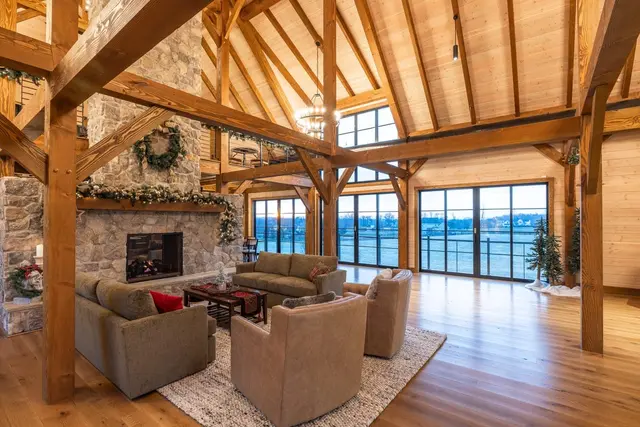
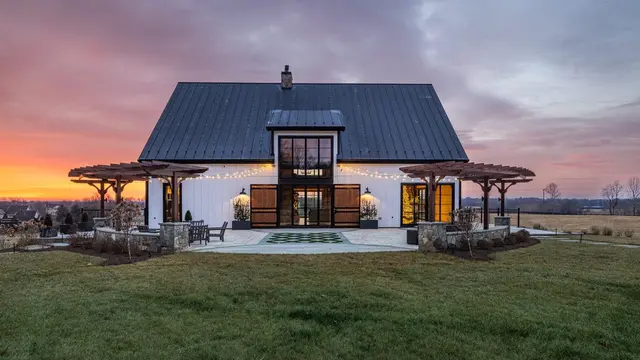
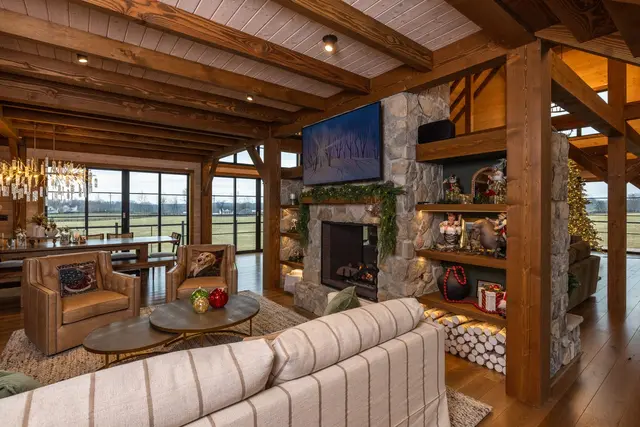
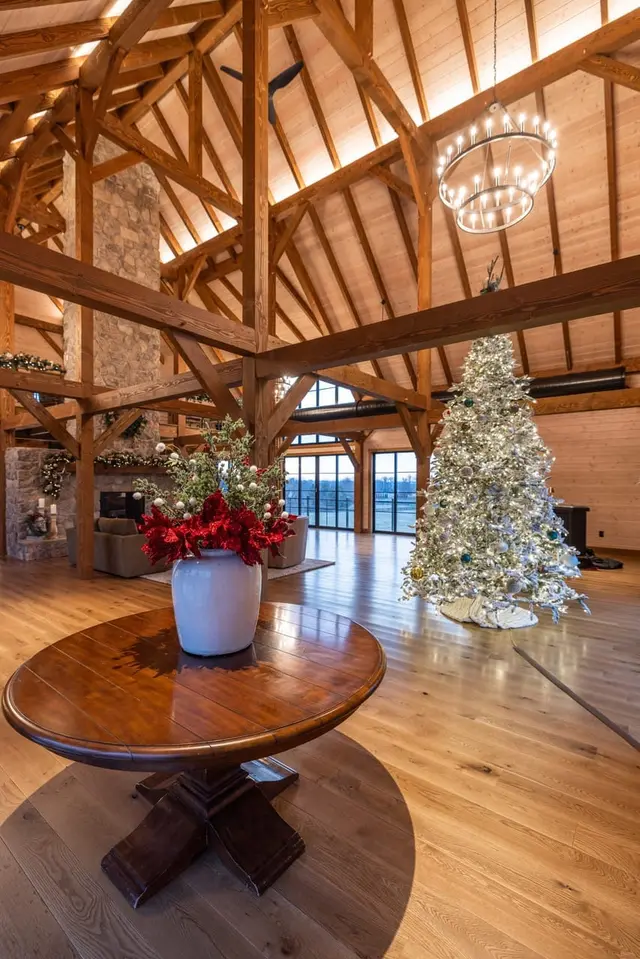
The Berryville Timber Frame Barn is the project that best represents what Clarke County construction looks like at its finest: a 40x100-foot heavy timber barn on a stone foundation, mortise-and-tenon joinery with wooden pegs, an integrated residence at one end, and agricultural storage at the other. Built to last 150 years in a county where 150-year-old structures are unremarkable.
Clarke County rewards the kind of construction Hearthstone does best: buildings that take the land seriously, use materials that belong in the landscape, and are built with the permanence that agricultural Virginia deserves.
For estate buyers considering the western Virginia corridor -- from the Blue Ridge through the Shenandoah Valley to the eastern slope of the Alleghenies -- Clarke County is the market where the best land value, the clearest agricultural character, and the most sympathetic regulatory environment come together.
FAQ
Q: How do Clarke County land costs compare to Loudoun County? Rural land in Clarke County typically runs 30-50% less per acre than comparable land in western Loudoun County. A 20-acre parcel with views, agricultural character, and a good building site might be priced at $400,000-$600,000 in Clarke County versus $700,000-$1,100,000 for a comparable parcel in western Loudoun. The gap has narrowed somewhat as Clarke County has been discovered by buyers priced out of Loudoun, but it remains meaningful.
Q: How long does it take to get a building permit in Clarke County? For a primary residence on rural land, expect 6-10 weeks from complete application submission to building permit issuance in Clarke County -- faster than Loudoun County's typical 10-16 week timeline. The shorter timeline reflects the county's smaller staff and lower application volume. Well and septic permitting through the Virginia Department of Health runs on statewide schedules and is similar in both counties.
Q: Can I build a farm winery or farm brewery on agricultural land in Clarke County? Yes. Virginia's farm winery and farm brewery statutes apply statewide and pre-empt local zoning restrictions for qualifying agricultural operations. Clarke County A-1 zoned land that meets the acreage and agricultural use requirements for farm winery or farm brewery licensing is eligible for those uses by right. The same licensing pathway through Virginia ABC and VDACS applies as in Loudoun County.
Planning estate construction in Clarke County or western Virginia? We know the land and the regulatory environment: hearthstonedesignbuild.com/contact | (571) 556-1900